
It’s 4 pm and you’re standing in front of the fridge, still undecided about dinner. The bhindi you wanted to make is finished, the curd is almost over, and your cook is due in half an hour. Most of us have been there. With a part-time cook, the problem is a bit bigger because she works in a fixed slot and has only so much time to spare.
Weekly meal planning is a simple way out. You sit down once, decide the rough menu, see what’s already in the kitchen and tell your cook what’s coming. No fancy chart or app is needed. A loose plan that suits how your family actually lives is enough.
Why Weekly Meal Planning Makes Daily Cooking Easier
Planning takes a little effort at the start, but it saves you from answering “aaj kya banega?” every single day. Everyone gets a rough idea of what’s coming, so the last-minute “can we make something else?” requests become rarer. Your grocery list is also ready, which means you buy for the meals you’ve planned instead of dashing out for one missing ingredient.
It helps with preferences too. If a child wants a particular tiffin item or a grandparent prefers plain khichdi on certain days, you can fit that in beforehand rather than adjusting on the spot. And your cook gets a clearer picture. She walks in knowing what to make and finds the ingredients in place.
If you need help with regular meal preparation, explore our home cooking service to learn more about the service.
None of this guarantees you’ll save a fixed amount of time or money. It just makes the routine calmer.
How to Create a Weekly Meal Plan for Your Family
A notebook, a phone note or the back of an old calendar will do. Before you fill in the days, think through a few things.
Start by asking the family. Let everyone name a couple of dishes they’d enjoy that week. Make a note of what goes into the kids’ tiffin, what the elders prefer and what someone simply refuses to eat.
Next, be clear about which meals your cook handles. In many homes it’s lunch and dinner, with breakfast managed by the family, but this differs from house to house. Plan only what she will actually be cooking.
Keep her working time in mind as well. If every day needs dal, two sabzis, rice and fresh rotis, it may not fit into her slot. A heavy day followed by a lighter one usually works better.
If you are unsure which arrangement suits your household, read our guide on part-time cook vs full-time cook before deciding what works best for your routine.
Always look in the kitchen before deciding. Half a packet of paneer or a few leftover tomatoes can settle what goes on the menu. Also think about the tricky days, like a late return on Thursday or a school event on Friday, and keep those meals quick and simple.
Finally, if anyone follows a particular diet or has a medical condition, adjust the menu for them and check with their doctor or dietitian where needed.
How to Manage Meal Planning With a Part-Time Cook
A plan is only helpful if the cook is aware of it. You can share it with her face to face write the menu on a board in the kitchen or send her a message, whichever’s easiest for her.
Mention anything that needs to be done of time like soaking rajma or chole marinating paneer or setting curd. Let her know a day before not on the morning of the day itself. Spice levels oil preferences and any allergies are important to mention too. It also helps to tell her how many people will be eating and if any food should be kept aside for tiffin.
Then there is the question of who does what. Part-time cooks do not all work the way. Some chop,. Clean the counter after while others only cook. Whether she suggests dishes or helps with shopping depends on what the two of you have agreed on so discuss it in a conversation than making assumptions. If the plan changes let her know before she starts working. A quick message is much better than a surprise, in the middle of cooking.
If you’re still figuring out whom to hire and how the arrangement should work, our part-time cook hiring guide in Gurgaon covers that side. This article deals with what comes after.
An Example of How This Works in a Typical Week
A family sits down on Sunday evening to plan lunch and dinner for the week. Everyone adds a suggestion or two. Monday’s lunch becomes dal tadka, jeera rice and a mixed vegetable sabzi, and dinner is roti with paneer bhurji. The other days are filled in the same way.
Before writing the grocery list, one person checks the kitchen. There’s enough rice, atta and dal, plus some onions and tomatoes. Paneer, capsicum, bhindi and curd are missing, so those go on the list along with a few vegetables for later in the week. The menu goes up on the kitchen board, with a note that Tuesday’s rajma must be soaked the night before.
On Tuesday evening, the family finds out that relatives are coming for dinner on Wednesday. They tell the cook right away and increase the quantity for that meal. The vegetable pulao is swapped for something easier to scale up and moved to another day, while Wednesday’s bhindi stays as planned.
The change was small, it was shared early, and the cook knew exactly what to make.
How to Prepare a Weekly Grocery List
Your list of groceries must come directly from your meal plan. Look at the menu day by day. Write down the main ingredients each meal requires. Before you finish making the list check your pantry, fridge and spice box. Cross out anything you already have in enough amount. What is left can be grouped by type: vegetables and fruits dals and grains, dairy, spices and the rest.
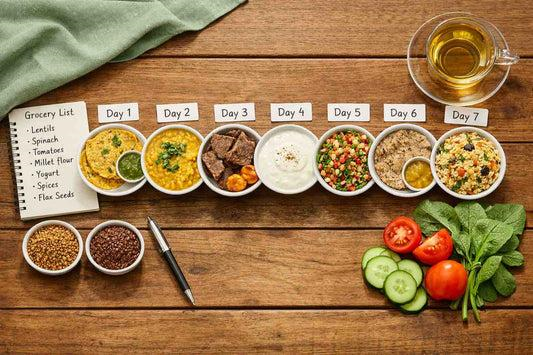
This way shopping is faster. It is easier to remember everything when the list is organized. It also helps to keep items separate from long-lasting items. Vegetables might need to be restocked during the week while rice, flour and dals can be bought in amounts if you have space to keep them.
Keep a list that changes throughout the week and add items the day they run out so you don’t forget them during the shopping trip. The amounts you need depend on how people you cook for and how much they eat so your own habits are a better guide, than any general rule.
A Sample Weekly Indian Meal Plan
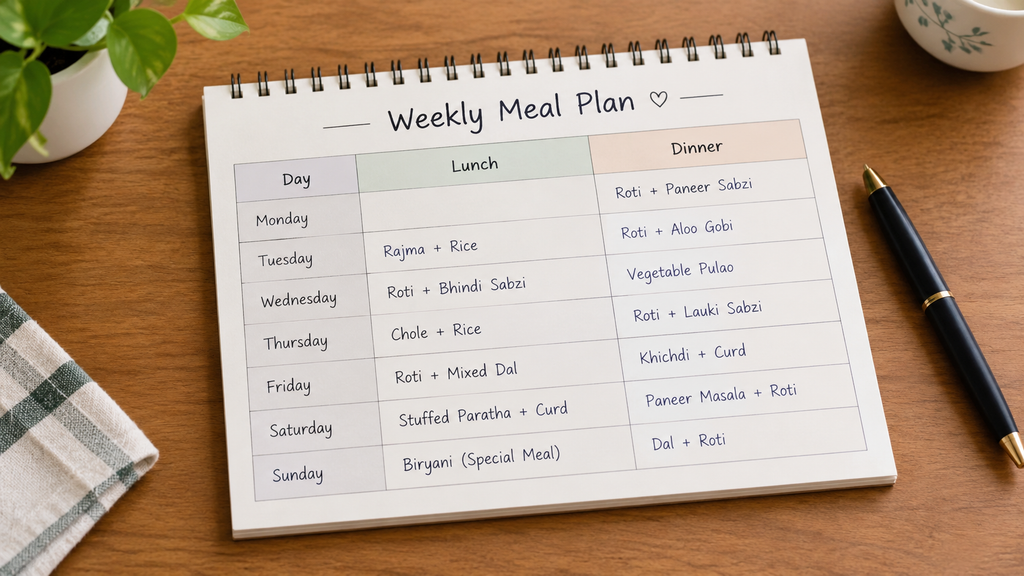
Here’s a simple example of how a week could look. It is only an illustration, not an actual customer plan or nutrition advice. Please adapt it to your family’s tastes, schedule and dietary requirements.
| Day | Lunch | Dinner |
| Monday | Dal tadka, jeera rice, mixed vegetable sabzi | Roti, paneer bhurji, cucumber raita |
| Tuesday | Rajma, rice, salad | Roti, aloo gobhi, dal |
| Wednesday | Roti, bhindi sabzi, kadhi | Vegetable pulao, raita |
| Thursday | Chole, rice, onion salad | Roti, lauki sabzi, moong dal |
| Friday | Roti, mixed dal, seasonal sabzi | Vegetable khichdi, papad, curd |
| Saturday | Stuffed parathas, curd, pickle | Egg curry or paneer masala, roti, rice |
| Sunday | A special meal of the family’s choice, such as biryani or a regional dish | Light dinner with leftovers, or simple dal and roti |
Heavier meals are spread across the week, and lighter ones like khichdi sit where a family may want a break. If your household doesn’t eat eggs or follows other food customs, swap dishes freely.
Common Weekly Meal Planning Mistakes to Avoid
The most common one is planning too many complicated dishes. If every day needs several elaborate items, the plan won’t fit into the cook’s working time. Another is forgetting what’s already at home, which is how people end up with three packets of the same dal.
Some families make the menu without asking anyone, and a menu nobody likes tends to be ignored within a week. Others forget to tell the cook about changes. A guest, a trip or a skipped meal should reach her in time.
Being too strict is a mistake as well, since a plan that can’t bend to real life is hard to stick with. And finally, it’s worth spending a few minutes at the end of the week noting what worked and what didn’t. Without that, the same problems keep returning.
How to Keep Your Weekly Meal Plan Flexible
Treat the plan like a guide, not a rulebook. Keep one or two meals for leftovers ordering in or a sudden craving. Let the plan allow swaps between days well. If a vegetable is not available or no one feels like a dish the plan swaps that meal with another meal on a different day.
Keep a few dishes in mind that the plan can grow if guests arrive. Leftover vegetables and dal can become parathas, pulao or part of the day’s meal. The plan should be revisited now. Then because exams, festivals, seasons and work schedules all change what fits you.
Every household is different. Some families use the plan for dinners others use the plan, for the whole day and both approaches are fine.
Conclusion
A good weekly meal plan works around your family’s schedule, uses what you already have at home and fits the arrangement you’ve made with your cook. Begin small. Choose the main meals, make a list of what you need to buy, share the menu a day or two ahead and change things as you go. After a few weeks, you’ll know what works best for your home.
Families looking for support with cooking and everyday household tasks can explore our domestic help services in Gurgaon to learn more.
Frequently Asked Questions
1. What is weekly meal planning?
It means deciding your meals for the coming week in advance. This usually includes choosing dishes, checking what you have at home and making a grocery list.
2. How can I manage meal planning with a part-time cook?
Share the menu in advance, mention any preparation needs like soaking or marinating, and inform her early about changes. Agree clearly on which tasks she will handle instead of assuming.
3. What should I include in a weekly Indian meal plan?
A mix of dals, vegetables, rice or rotis and sides like raita or salad, depending on your family’s preferences. Vary the dishes across the week and adjust for dietary needs.
4. Can weekly meal planning help reduce food waste?
It can, because you buy for specific meals and use up what’s already at home. How much it helps depends on how closely you follow the plan and how your household eats.