
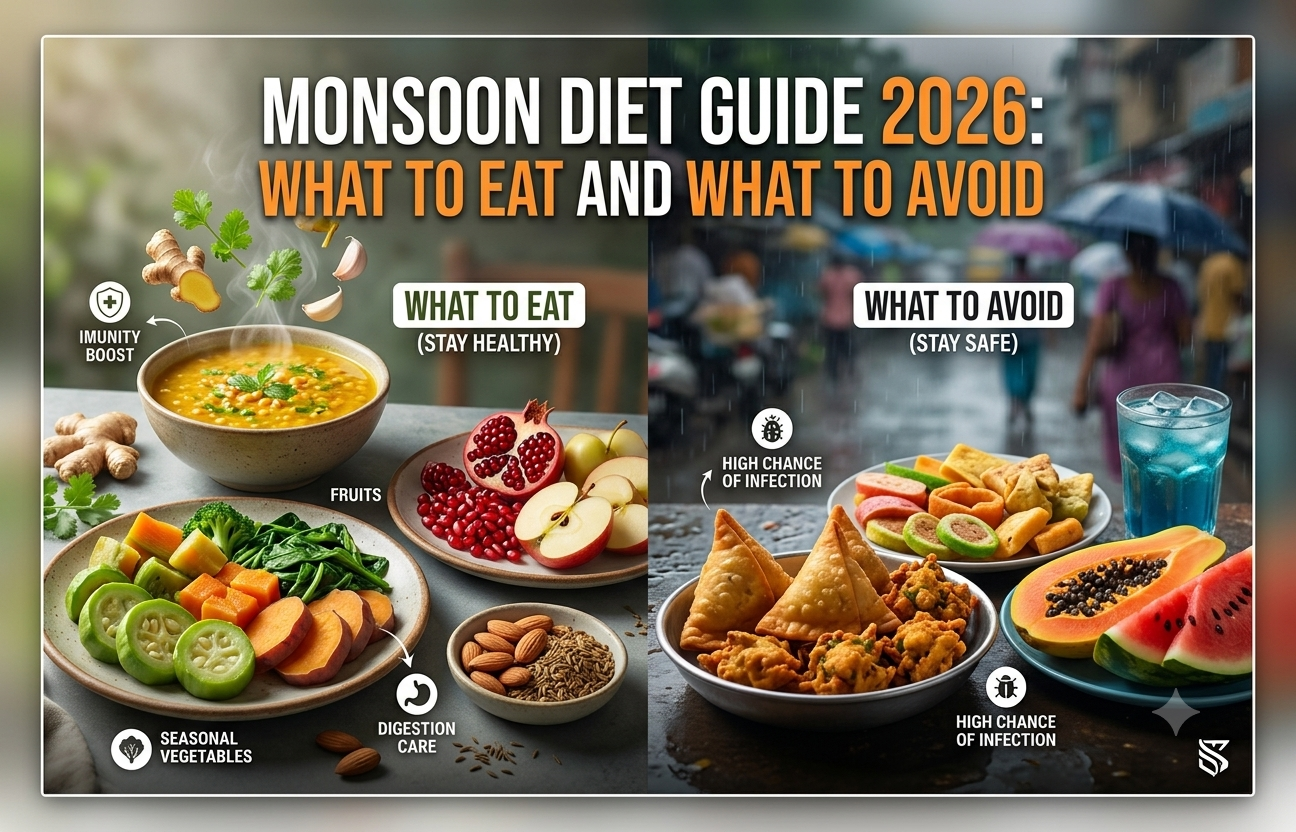
Monsoon brings cooler weather, green surroundings and a welcome respite from the summer heat. It also changes our body’s response to food. This season, many people face stomach problems, low flow or frequent infections. One common reason is that they continue to eat as they do in other seasons without paying attention to their body and good-quality food. Good monsoon diet planning is not about following strict rules. It is an easy choice and ready to help you become healthy. Fresh, cooked food, drinking safe water, and seasonal ingredients can make a big difference.
In this guide, we’ll learn special foods for the monsoon season, what to stay away from, and some sensible healthy monsoon diets that are clean to keep every day.
Why Your Monsoon Diet Matters
The monsoon season brings more moisture, which helps to grow microorganisms and fungi easily. Food ruins faster, especially if left out for a long time.
This is why many doctors and nutritionists suggest eating clean and fresh food. Don’t store cooked food for long hours.
A simple home-cooked meal is a better choice compared to store cooked food.
Read Also: Daily Meal Delivery in Gurgaon: Things to Know Before You Choose
What Should Eat During the Monsoon
1.Homemade Fresh Cooked Meals
In the monsoon season fresh foods are always the safest option.
The naturally occurring hot food is appetizing and cooked immediately, served at the right temperature helps to prevent infection.
Even simple Indian foods like pulses, rice, chapatis and vegetables with curd give a very good balanced nutrition without overloading the digestive system.
Today, a lot of busy individuals prefer to opt for daily meal delivery that permits them to relish home-cooked food minus the use of junk or severely processed dishes.
2. Seasonal Fruits
Fruits provide vitamins, minerals, and natural hydration.
Choose fruits that can be washed properly or peeled before eating, such as:
- Apples
- Pears
- Pomegranate
- Papaya
- Bananas
Wash fruits carefully before eating them.
3. Warm Soups
A bowl of vegetable soup gives you a comforting feeling in monsoon season.
When you make soups make sure to use fresh vegetables that can be light for the stomach which is providing important nutrients. Please avoid using too much cream or butter.
4. Khichdi
Khichdi is also the best food for the rainy season because it is simple, light, and easy to digest. You can use seasonal vegetables in this. It is made more nutritious.
Many people cook khichdi in the heavy rains because it is filling without feeling heavy.
5. Ginger and Tulsi Tea
During the monsoon warm herbal drinks are the best detox drinks.
Ginger and basil are commonly used in Indian homes and many people enjoy them with tea sometimes during the rainy season.
Try to use minimal sugar if it makes sense.
6. Protein-Rich Foods
Protein supports overall health.
Good options include:
- Dal
- Paneer
- Eggs
- Sprouts (well cooked)
- Chicken (properly cooked)
- Fish (fresh and fully cooked)
Avoid half-cooked food.
7. Fresh Curd (When It Suits You)
Curd supports digestion for many people.
If cold foods usually cause discomfort during the rainy season, you can reduce the quantity or choose buttermilk made with fresh ingredients.
Foods to Avoid During the Monsoon
1. Cut Fruits Sold Outside
Pre-cut fruits may be exposed to dust, flies, and changing weather conditions.
Freshly cut fruit at home is a safer option.
2. Uncovered Street Food
Monsoon changes the environment. Rainwater creates moisture and humidity in the air. That can increase food contamination.
Enjoying street food occasionally is a personal choice, but it is important to select clean places and freshly prepared food.
3. Oily Fried Foods Every Day
Pakoras and samosas are popular during rainy weather.
Eating them during the week when you feel better. Don’t eat this every day, it will make you feel heavy and uncomfortable. A balanced meal plan is consistently important.
4. Raw Leafy Vegetables
Green Leafy vegetables are the best source of minerals. But in the rainy season may carry dirt and tiny insects.
If you eat them, rinse them perfectly and cook them properly.
5. Cold Drinks
Cold drinks may feel refreshing but they add extra sugar without providing much nutrition.
You may choose:
- Lemon water
- Coconut water
- Warm herbal drinks
- Plain drinking water
Follow Healthy Monsoon Diet Tips
Small behavior often counts for more numbers than steeply priced foods.
Some handy and healthy monsoon meal planning guides are included:
- Eat freshly cooked food whenever possible.
- Drink plain and safe water.
- Wash fruits and vegetables gently.
- Store cooked food neatly.
- Avoid skipping breakfast.
- Eat small meals instead of overeating.
- Keep your kitchen clean and dry.
- Include vegetables in every meal.
- Avoid wasting cooked food by making it the easiest to make that your own family prefers.
- Listen to your body’s hunger instead of eating just because it’s raining away.
A Simple One-Day Monsoon Meal Plan
Breakfast
Vegetable poha with ginger tea.
Mid-Morning
One banana or an apple.
Lunch
Chapati, dal, seasonal vegetables, and curd.
Evening
Roasted chana or homemade soup.
Dinner
Vegetable khichdi with clean salad (properly washed).
Simple meals usually shine better than complex dishes.
Why We Eat Homemade Food During the Rainy Season
Many people are busy with work, college, or traveling and don’t have time to make a consistent dinner.
That’s where new home-style meals come in handy.
Instead of relying on densely processed meals every day, many families now opt for daily meal delivery because it provides them with freshly prepared meals that feel like home cooking.
Awareness should continue to need to continue with the best food, hygiene and balanced vitamins.
Small Habits That Make a Big Difference
Eating healthy is not just about deciding on the right vegetables or fruits.
This also includes:
- Wash your hands before eating.
- Use of clean cookware.
- avoiding the stale residues.
- Drinking enough water.
- Meals on time.
These habits may seem extra small, yet they collectively help reduce many common monsoon fitness problems.
Final Thoughts
Wet time should be enjoyed, not spent stressed about stomach problems or low energy. Throughout the monsoon season, most health problems can be minimized with simple food choices and true kitchen habits.
Choosing the best food for the rainy season does not mean buying superfluous components. Freshly cooked food, end-of-season fruits, hot soups and balanced homemade meals are usually enough.