
Real Indian food. Planned smartly. Cooked simply.
Simple Weekly Meal Ideas it is make easy your daily lifestyle. Eating well every day does not require expensive ingredients or complex recipes. In most Indian homes, food has been simple, seasonal, and thoughtfully planned. The real challenge today is not what to cook but deciding every single day.
When meals are planned daily without structure, small expenses add up silently:
- extra vegetable purchases
- unused leftovers
- frequent outside food orders
- unnecessary heavy cooking
A good Weekly Meal Ideas can solve most of these problems.
In this blog, we are sharing a realistic 7-day meal plan that is affordable, balanced, and easy to prepare.
A Budget-Friendly Indian Meal Plan Have Three Things
A sustainable meal plan follows three basic principles:
- Everyday food, not special dishes
- Seasonal and local vegetables
- Light cooking suited to Indian digestion
This is how most households traditionally cooked and it still works best today.
How Weekly Planning Actually Saves Money
A weekly plan reduces expenses because:
- The same vegetables are used across multiple meals
- One dal or protein is stretched smartly
- Leftovers are planned, not accidental
- Cooking methods stay simple and low-oil
No extra buying. No forgotten food. No waste.
Simple Weekly Meal Ideas (Budget-Friendly)
Day 1 – Monday
Lunch: Arhar dal, aloo bhindi, roti
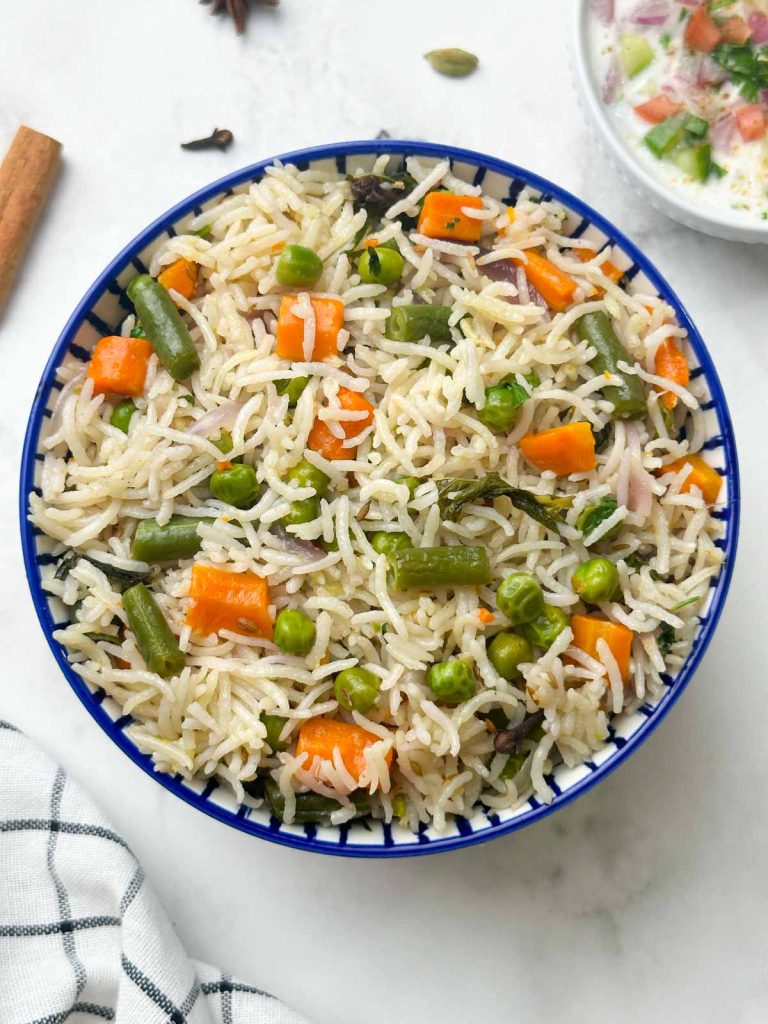
Dinner: Vegetable pulao, plain curd
Vegetable pulao
Why it works: Potatoes and bhindi are affordable and filling. Dal provides protein.
Day 2 – Tuesday
Lunch: Rajma chawal
Dinner: Lauki chana dal, roti
Kitchen insight: Cooking soaked rajma at home costs far less than ordering.
Day 3 – Wednesday
Lunch: Kadhi, rice
Dinner: Cabbage peas sabzi, roti
Digestive balance: Kadhi replaces dal for one day and keeps meals light.
Day 4 – Thursday
Lunch: Chole, roti
Dinner: Vegetable khichdi (little ghee)
Cost control: Chole can be prepared once and used smartly.
Day 5 – Friday
Lunch: Mix veg, moong dal, rice
Dinner: Leftover dal with fresh roti
Smart habit: Planned leftovers prevent food waste.
Day 6 – Saturday
Lunch: Egg curry or paneer bhurji (small portion), roti
Dinner: Poha or upma
Protein rule: Non-veg or paneer once or twice a week is enough.
Day 7 – Sunday
Lunch: Home-style veg biryani, onion raita
Dinner: Curd rice or light soup
Sunday logic: One special meal, still home-style.
Estimated Weekly Cost (Per Person)
Approximate Indian household expenses:
- Vegetables: ₹350–400
- Dal, rice, atta: ₹300
- Oil, spices, curd, extras: ₹150
Total: ₹800–900 per week per person
This range is realistic when food is planned and cooked consistently.
Common Mistakes That Increase Food Expenses
These habits quietly raise monthly costs:
- Cooking completely different sabzi every day
- Buying paneer or mushrooms too frequently
- Using excess oil and masala
- Ordering food on “busy days”
Ironically, busy days are exactly when planning helps the most.
Who This Meal Plan Works Best For
- Students living away from home
- Office-goers with long working hours
- Seniors who need light food
- Families managing monthly budgets
This is not diet food.
This is normal Indian food, cooked thoughtfully.
Final Thought
Budget-friendly eating is not about cutting quality.
It is about discipline, routine, and respect for food.
When meals are planned weekly, cooked simply, and eaten fresh:
- stress reduces
- digestion improves
- expenses automatically stay under control
This is how Indian kitchens have always worked and still should.